
Universal Credit: When a Safety Net Doesn’t Keep Up With the Real Cost of Living
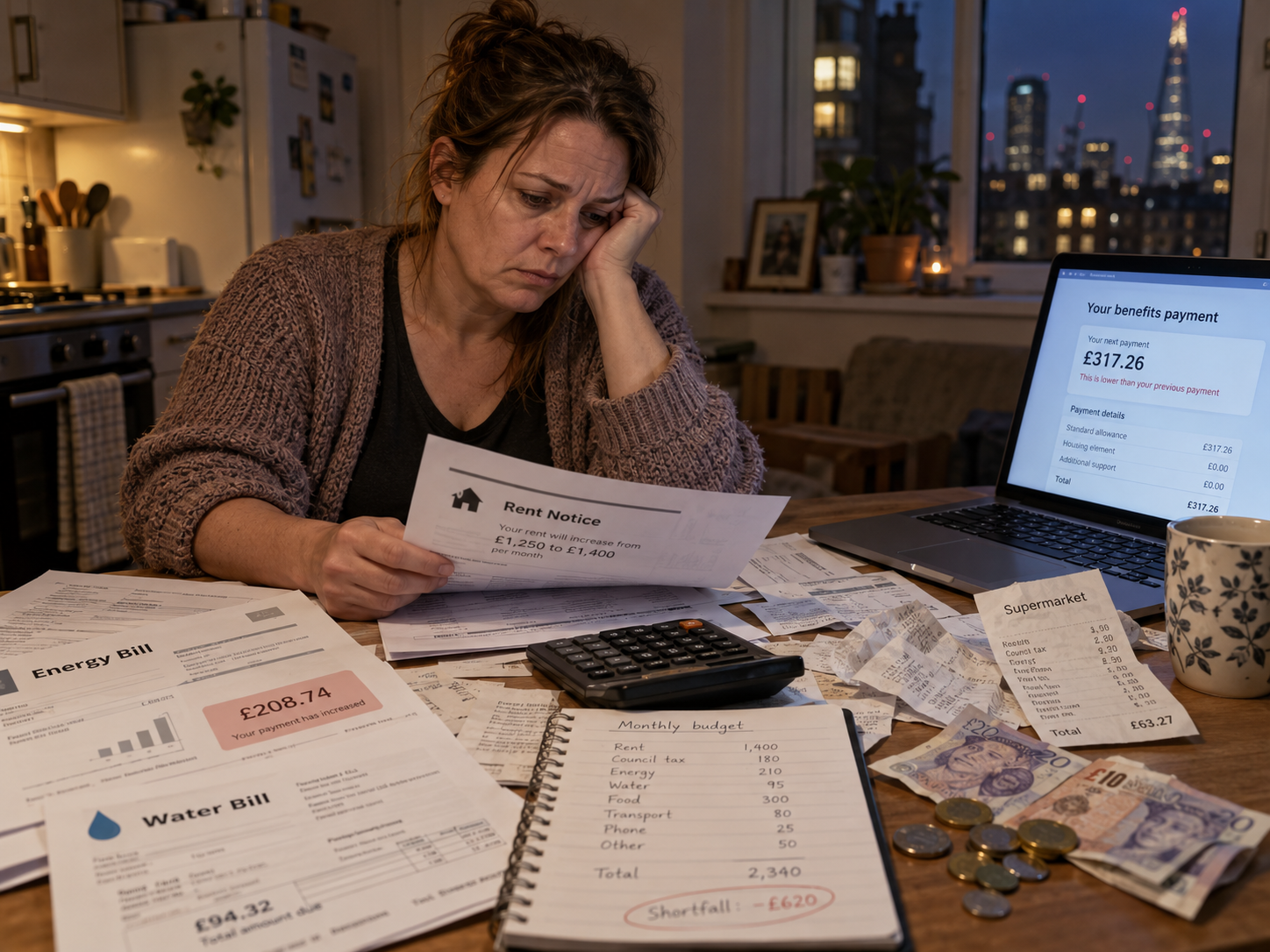
Universal Credit is designed to support people through unemployment, low income or unstable work. But problems arise when the benefit is calculated correctly according to the rules, yet the amount left after deductions is still not enough to cover basic living costs.
A striking example is British journalist Emma Gritt, who turned to Universal Credit after losing her job following almost 20 years in the media industry. She initially received £1,325.24 a month and planned to supplement it with occasional freelance work.
But even short-term work affected her payments. After earning £693 for several days of newspaper work, her Universal Credit was reduced by £381. Under the current taper system, each £1 of earnings can reduce Universal Credit by 55p.
After I was forced on to benefits at 41, every attempt to work left me worse off
The situation became much harder when a tax refund relating to an earlier period was treated as earnings. In one assessment period, her Universal Credit fell to just £321 for four weeks. Pasted text
At the same time, Gritt said her rent and bills were around £1,800 a month. She began selling records, clothes, books, perfume and household items, and later borrowed money simply to keep going.
This is not simply a problem of unemployment
The wider issue is that Universal Credit does not calculate payments by first asking how much an individual household actually needs that month for food, energy, transport and other essentials.

For 2026/27, the standard allowance for a single claimant aged 25 or over is £424.90 a month. However, the Joseph Rowntree Foundation and Trussell estimate that a single adult needs around £120 a week for basic essentials, excluding rent. Their research suggests that many low-income households receiving Universal Credit are still unable to afford at least one essential item.
The problem can affect people who are working too.
Some claimants have described working part-time while still relying on food banks. Others have received a first Universal Credit payment that was lower than their rent, while families facing delays have borrowed money from relatives simply to pay for electricity and housing.
Britain’s unemployment rate now worse than Italy’s
The monthly assessment period can create additional instability. If wages are paid every four weeks, or a payday moves because of a weekend or bank holiday, two salary payments can sometimes fall into one assessment period. On paper, the claimant appears to have earned significantly more that month, even though their annual income has not suddenly increased.
The difference between being eligible and being financially secure
This raises an important question about how we evaluate welfare systems.
It is easy to ask:
“Was the benefit calculated correctly?”
But perhaps we also need to ask:
“After that calculation, can the person actually afford to live until the next payment?”
A system can follow its rules perfectly and still create severe cash-flow problems for the person receiving support.
Sign in legal petition, please: Review Universal Credit assessment periods for monthly paid workers – Petitions
For someone with stable monthly earnings, budgeting is difficult enough during a period of high living costs. For someone whose Universal Credit can change substantially because of freelance income, an additional payday or a one-off tax refund, planning becomes even harder.
People can adapt to having less money.
What is much harder is adapting when they cannot reliably predict how much money they will receive next month.
A safety net also needs predictability
Universal Credit must take earnings into account, and any welfare system needs rules that balance financial support with employment.
But the experiences of people such as Emma Gritt raise a broader policy question: should the system look only at income received during a particular assessment period, or should it also consider the real financial impact created by sudden changes in benefit payments?
Because a safety net is not only about eligibility.
It is also about whether someone can still pay the rent, buy food, keep the electricity on and continue looking for work without falling further into debt.
A benefit can be correctly calculated and still leave someone unable to afford the basics. Those are two different measures of whether a system is working.
Sources: The Telegraph • GOV.UK / Department for Work and Pensions • Joseph Rowntree Foundation • Trussell • ITV News • The Independent • The Guardian.